
 Note: A version of this article was previously published by Politico on March 17, 2016.
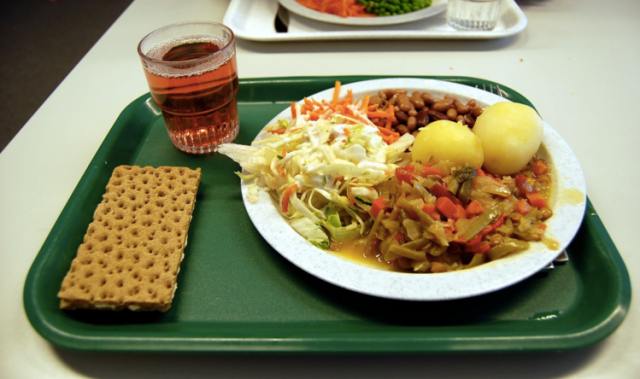
Should school kids have more fish on their lunch trays? That is just one of the questions that will need to be settled before the National School Lunch Act is reauthorized. Republican Senators Dan Sullivan and Lisa Murkowski —of Alaska, not coincidentally— think they should. They introduced their salmon-for-school bill in late February.
The law currently defines “domestic commodity” to mean “an agricultural commodity that is produced in the United States” and “a food product that is processed in the United States substantially using agricultural commodities that are produced in the United States.” S. 2529 would expand this “buy American” provision to also mean “a fish or fish product” harvested the United States’ “exclusive economic zone,” much of which surrounds Alaska.

If adopted, the measure would force local school officials’ to purchase fewer fish sticks from foreign waters. With 30 million children participating in the $13 billion lunch program, the fish bill could be a windfall. “I’m proud to join my colleagues to support this legislation, giving us the opportunity to put more of Alaska’s world-class, sustainably-harvested seafood onto the plates of America’s youth nationwide,” declared Murkowski.
The legislation’s arrival may well have elicited groans within the Russell building, which houses the Senate’s Committee on Agriculture, Nutrition, and Forestry. Just a month earlier, the committee had reported its 210-page bill, which reauthorizes the school lunch act and the complimentary childhood nutrition act. Continue reading “Our 70-Year School Lunch Food Fight”




 Federal Education Policy History
