Department of Education Organization Act, 1979

The U.S. established a Department of Education first in 1867.  This original department, however, was not a cabinet level agency, and within a few years was replaced with a bureau and then an office.

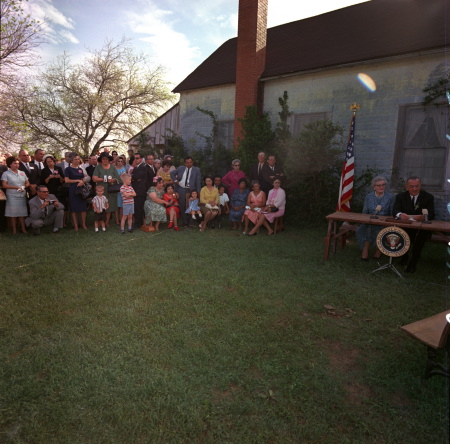
On October 17, 1979 President James E. Carter signed the Department of Education Organization Act (P.L. 96-88; 93 Stat. 668).  It replaced the Office of Education with a department proper, and installed a secretary at its head.

Historic Use of the Term “Failing School”

Politics is about many things—power, money, authority, values, ideas…

It also is about language.  In current school reform debates, the phrase “failing school” and its plural form “failing schools” are used very often.

Below are two Google Ngram charts that depict the rise in the frequency of this term in books appearance between 1900 and 2008.  The results are rather eye-popping—use of the terms took off after 1990.  (Click on the figures to get a much larger view of them.)

Chart 1. Term: “Failing School”

Continue reading “Historic Use of the Term “Failing School””

Beatrice F. Birman et al., The Current Operation of the Chapter 1 Program (1987)

This study of Chapter 1 (Title I) was commissioned by by the Department of Education’s Office of Educational Research and Improvement (formerly the National Institute of Education).

The report was produced by Department of Education staff and researchers at private sector firms, such as Policy Study Associates. Congress mandated this study be done in December 1983.

A big finding of this study was that only a small proportion of students served by Chapter 1, the centerpiece of the Elementary and Secondary Eduction Act of 1965,were achieving at the levels that other American children were.

The full citation is Beatrice F. Birman et al., The Current Operation of the Chapter 1 Program: Final Report from the National Assessment of Chapter 1 (Washington: GPO, 1987).

Survey of Elementary Schools’ Curricula (1925)

This is a wonderful survey titled Legislative Control of Elementary Curriculum. It was authored by Jesse Knowlton Flanders in 1925.

His research question is simple: What are the 48 states (yes, 48) requiring students to study?

Flanders utilized statutes from each state to derive his findings.  Not surprisingly, in a time when the federal government had very little involvement in the schools, each state has its own idiosyncratic curriculum.

Politics of Education Association

The Politics of Education Association (PEA) is a group of mostly academics who study education policy in the United States.  Unlike this website, PEA’s does not focus solely on the federal government’s role in schooling.  PEA’s scholars study education policy and politics at the state and local levels too.

PEA’s membership includes many renown experts, and it publishes newsletter, a year book, and a biannual issue of the Peabody Education Journal.

You can learn more about PEA at http://www.fsu.edu/~pea/